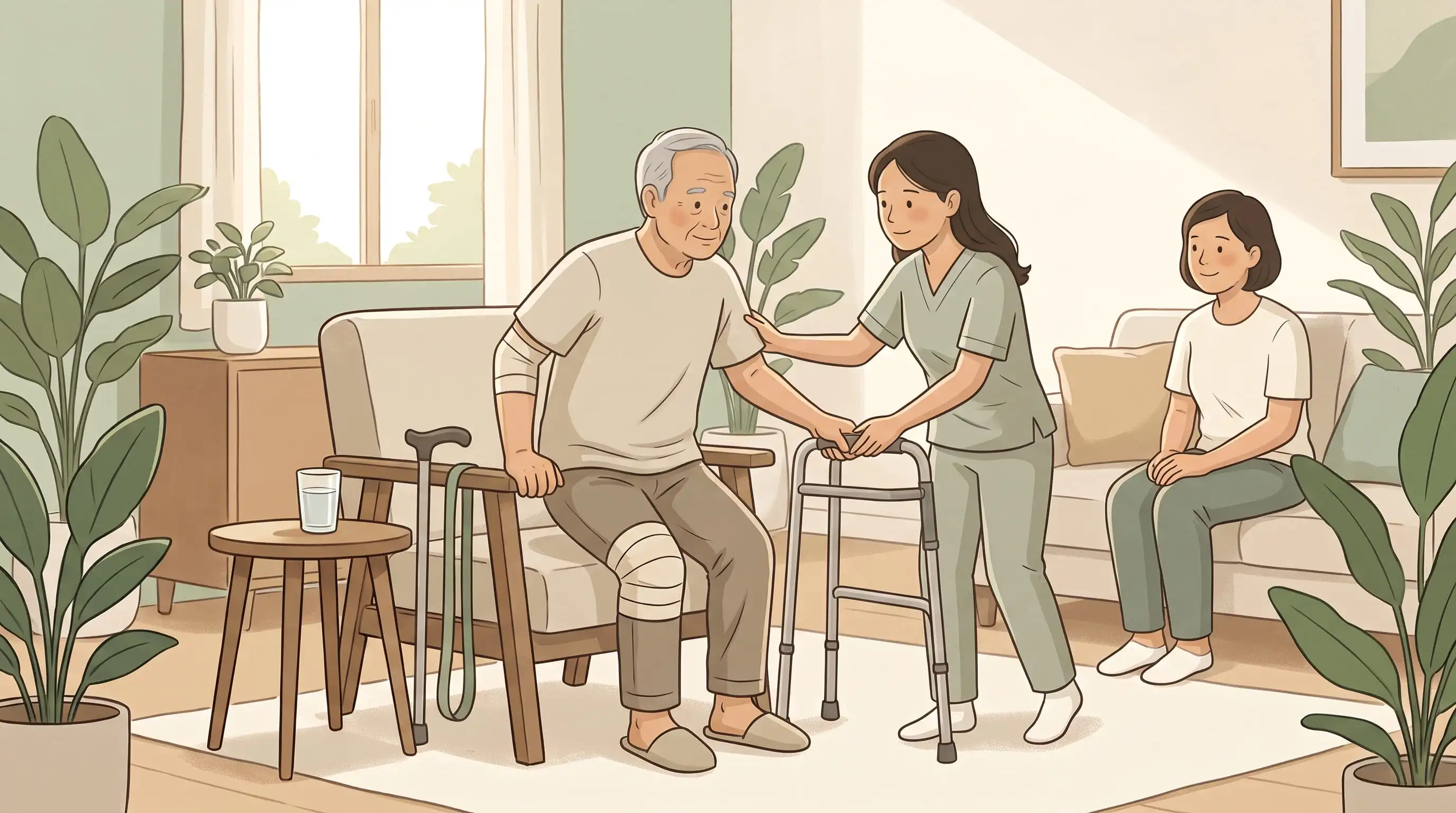
Why physiotherapy may help
Surgery and prolonged rest can affect strength, mobility and confidence in daily activities. Rehabilitation may help address these limitations.
Timing depends on the procedure
Some people begin supported movement early in hospital. Other operations require specific restrictions on movement or weight bearing. Always follow the surgical team’s plan.
Before the wound has fully healed
Certain gentle activities may be appropriate before a wound is completely healed, but they must not interfere with healing or clinical restrictions.
What rehabilitation may include
Depending on the condition, activities may include bed mobility, transfers, walking with appropriate equipment and gradual return to everyday tasks.
Information to prepare
Keep details of the procedure, discharge instructions, medications, movement precautions and current equipment available for assessment.
Warning signs
Worsening pain, fever or wound changes warrant medical advice. New one-sided leg swelling needs prompt assessment. Chest pain, severe breathing difficulty or loss of consciousness requires emergency assistance; call 1669 in Thailand.
Rehabilitation at home
The home setting can support meaningful practice after discharge, provided it follows the surgical team’s restrictions.
Recovery at your own pace
The safest approach is individualized. Families may ask Chokdee Physio about the suitability of home rehabilitation after acute medical care.