What is a stroke?
A stroke may be caused by a blocked blood vessel or bleeding in the brain. Symptoms can overlap but treatments differ, so hospital assessment is essential.
Recognizing B.E.F.A.S.T.
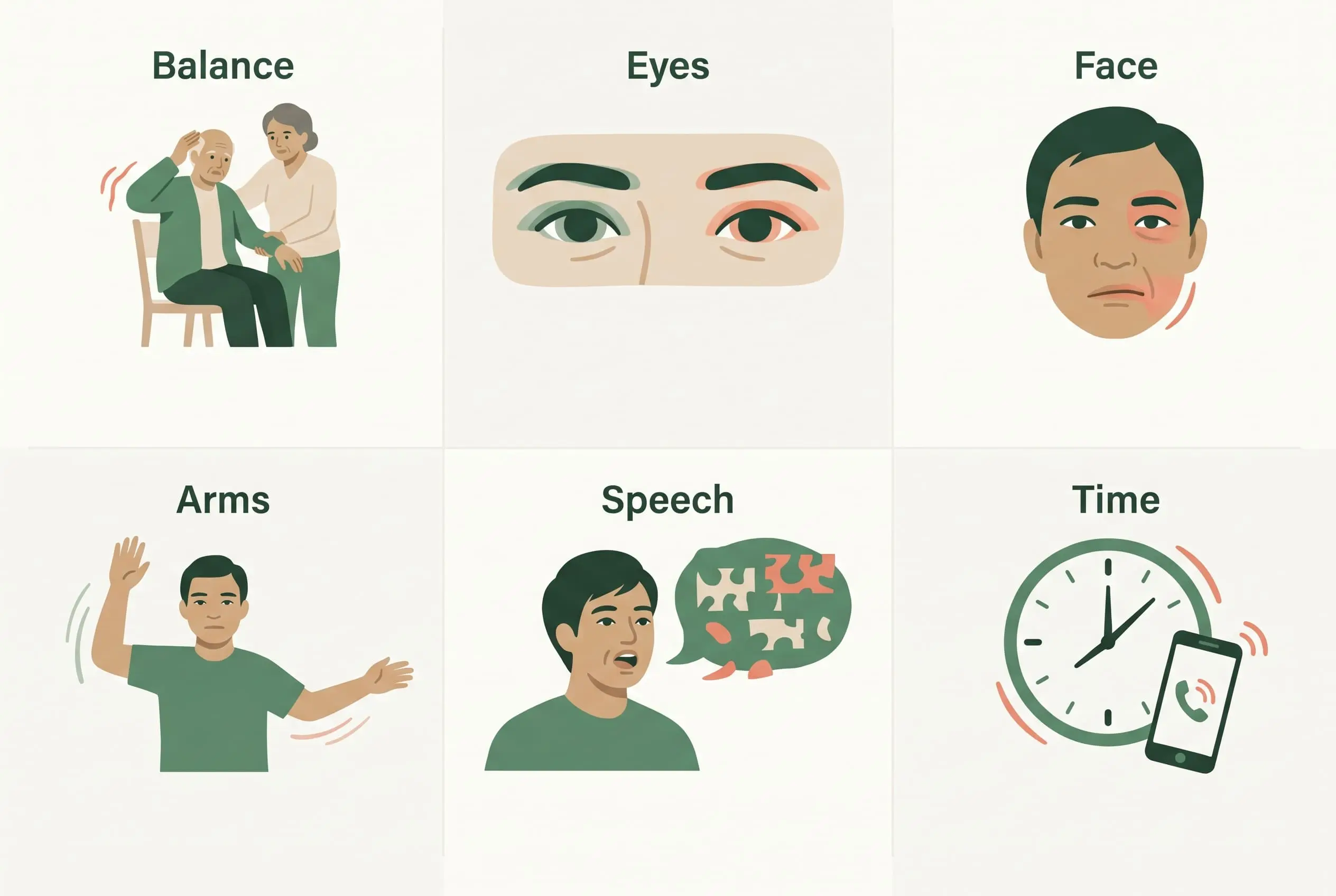
B — Balance: sudden difficulty with balance or coordination. Do not ask someone who is unsteady to walk.
E — Eyes: sudden vision changes or double vision.
F — Face: one side of the face droops when smiling.
A — Arms: sudden weakness or numbness, often on one side.
S — Speech: speech becomes slurred, unusual or difficult to understand.
T — Time: call 1669 immediately. One warning sign is enough; do not wait to complete a home test.
A sudden severe unexplained headache may also occur. B.E.F.A.S.T. cannot confirm or rule out stroke.
What to do immediately
Call 1669 and tell the dispatcher you suspect a stroke. Note when symptoms began or the last time the person was well.
Keep the person safe and follow dispatcher instructions. Do not give food, drink, aspirin or other medication. Do not delay by waiting for symptoms to improve.
If symptoms disappear
Temporary symptoms may be a transient ischemic attack (TIA). Emergency assessment is still essential even if the person feels normal again.
Hospital assessment
Clinicians may perform neurological and blood tests and obtain CT or MRI imaging to identify the problem and determine treatment.
Rehabilitation after emergency care
Once medically stable, rehabilitation may address walking, balance, arm use and everyday activities. Follow the treating team’s guidance.
Remember: stroke is an emergency
Call 1669 immediately in Thailand if you suspect a stroke. Chokdee Physio does not provide emergency services.